
Website Speed: Is Your Slow Website Costing You Leads?

If your website takes more than three seconds to load, you may be losing potential customers before they have even read your headline.
Google research has previously found that 53% of mobile visits were abandoned when a page took longer than three seconds to load. For a Brisbane tradie or local business investing in Google Ads or SEO, that can mean spending money to attract visitors who leave before they ever see what your business offers.
Website speed is not simply a technical issue. It can affect user experience, conversions, and how effectively your marketing turns website traffic into enquiries.
Why Website Speed Matters for Leads
Many business owners think of website speed as something developers need to worry about.
In reality, it is also a lead generation issue.
When a page takes too long to load, visitors have more opportunities to leave before they call your business, submit an enquiry form, read your services, or take another step toward becoming a customer.
Research from Portent found that B2B websites loading in one second had conversion rates around three times higher than websites loading in five seconds. The exact impact will vary depending on the industry, traffic source, audience, and quality of the page, but the underlying principle is straightforward.
The easier it is for visitors to access and use your website, the less friction there is between a click and an enquiry.
This is particularly important for businesses running paid advertising. If you are paying for every visitor through Google Ads, you want as many qualified visitors as possible to reach your website and complete the action you want them to take.
What Is Actually Slowing Your Website Down?
A slow website is rarely caused by one single problem.
In many cases, several smaller issues combine to create a poor loading experience.
Common causes include:
- Unoptimised or oversized images
- Bloated plugins
- Page builders loading unnecessary resources
- Too many third party scripts
- Chat widgets and tracking tools
- Embedded fonts and external resources
- Poorly configured caching
- Hosting that is not well suited to the website
- Unnecessary CSS and JavaScript
- Poorly optimised website code
The good news is that fixing these issues does not always mean rebuilding your entire website.
A proper website speed audit can help identify which problems are actually affecting performance so improvements can be prioritised based on their potential impact.
What Google Measures: Core Web Vitals
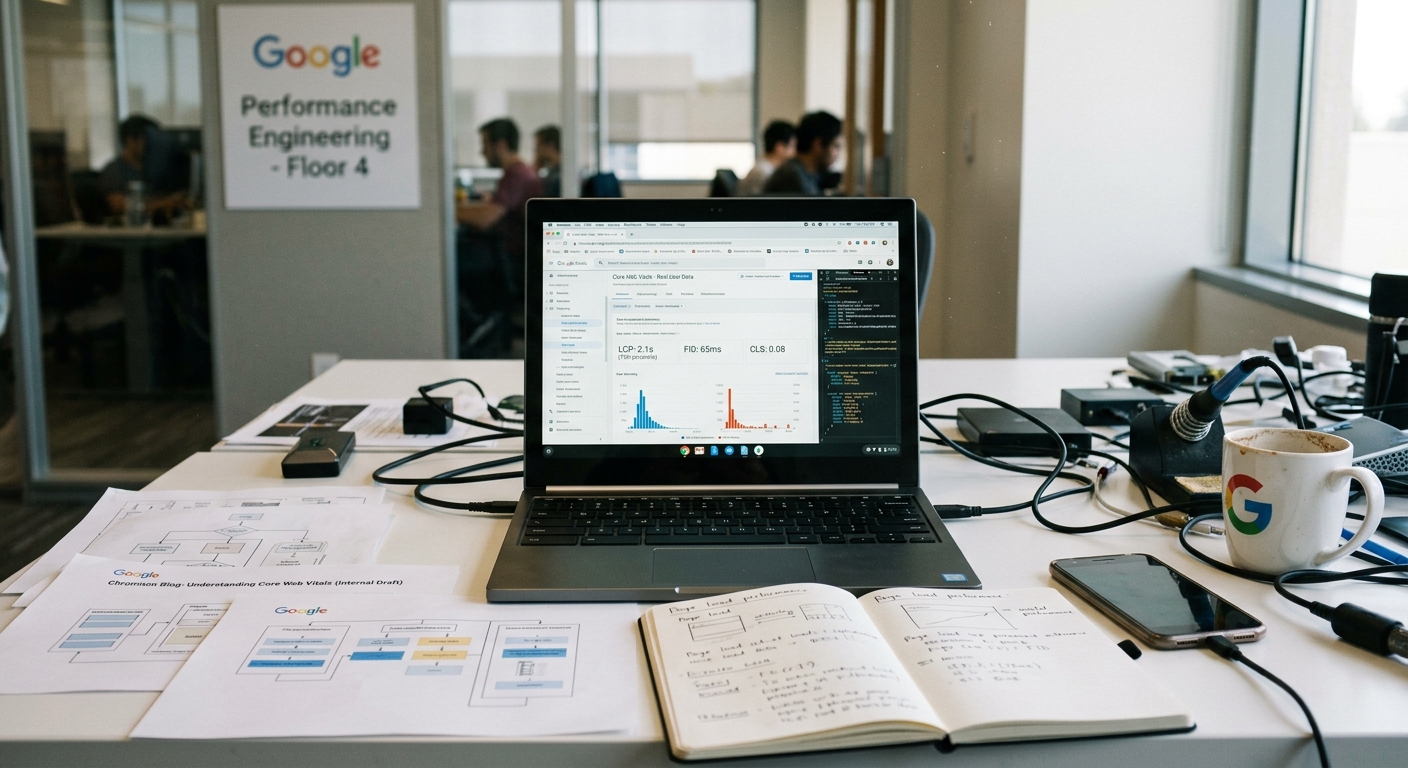
When discussing website speed and SEO, you will often come across the term Core Web Vitals.
Google’s Core Web Vitals focus on several important aspects of the real user experience:
Largest Contentful Paint (LCP)
LCP measures how quickly the main content of a page becomes visible.
Google recommends an LCP of 2.5 seconds or less for a good user experience.
If the main heading, image, or other important content takes too long to appear, visitors may become impatient before the page has even finished loading.
Interaction to Next Paint (INP)
INP measures how quickly a page responds when a visitor interacts with it.
Google recommends an INP of 200 milliseconds or less for good performance.
This matters when someone clicks a button, opens a menu, submits a form, or interacts with another element on your website.
Cumulative Layout Shift (CLS)
CLS measures how much the layout unexpectedly moves while the page loads.
Google recommends a CLS score of 0.1 or less.
For example, imagine a visitor is about to click your “Get a Quote” button, but an image loads and suddenly pushes the button down the page. That type of unexpected movement creates a frustrating experience and can result in accidental clicks.
Core Web Vitals are useful because they go beyond a simple overall speed score. They focus on specific parts of the experience that visitors actually encounter.
They are also relevant to technical SEO and page experience, although website speed alone will not make a website rank.
Website Speed Is Also About Trust
Speed is not only about technical metrics.
It can influence how a visitor perceives your business.
Imagine searching Google for a local electrician, plumber, builder, or other service provider. You click one website, but the page takes several seconds to appear. You click another result and the page loads almost immediately.
The second website may simply feel easier to use.
That does not automatically mean the second business is better, but a smooth website removes one potential source of frustration.
For local businesses competing with several companies in the same search results, every part of the customer journey matters.
Your website should make it easy for potential customers to:
- Understand what you offer
- See where you operate
- Find your contact details
- View your services
- Trust your business
- Request a quote or make an enquiry
A slow website can create unnecessary friction at each of these stages.
Website Speed and SEO: What Is the Connection?
Website speed is one part of a much larger SEO strategy.
Optimising your website for search involves many different elements, including content quality, search intent, technical SEO, internal linking, local SEO, authority, and user experience.
A fast website does not automatically rank at the top of Google.
However, improving performance can support the broader SEO strategy by making your pages easier for visitors to access and use.
This is especially important when you have already invested time and money into getting traffic to your website.
There is little value in generating more visitors if a significant portion of them leave because the website is difficult or frustrating to use.
If you want a broader explanation of how SEO works, our guide on what an SEO agency actually does explains the key areas involved in an SEO campaign.
Website Speed and Conversion Rate
Getting someone to your website is only part of the process.
The next question is what they do once they arrive.
A visitor might:
- Click your Google listing or advertisement
- Land on your website
- Read about your service
- Look for proof that you are trustworthy
- Check your service area
- Call, submit a form, or request a quote
Website speed can influence the transition between these stages.
If the website loads quickly and responds smoothly, there are fewer technical barriers between the visitor and your conversion point.
If it is slow, difficult to navigate, or constantly shifting while loading, the visitor may leave before reaching your call to action.
This is why website speed optimisation can work alongside conversion rate optimisation. The objective is not simply to make a website score well on a testing tool. It is to create a website that supports the customer journey.
What This Means for Your Business
If you are investing in Google Ads, SEO, social media, or other digital marketing, your website is where much of that traffic eventually ends up.
That makes website performance an important part of the marketing funnel.
A slow website can become a leak between your marketing spend and your revenue.
For example, you could be ranking well for valuable keywords, generating clicks from Google Ads, or attracting visitors through social media. But if those visitors encounter a slow or difficult website, fewer of them may reach your enquiry or booking process.
An initial speed audit can help identify issues involving:
- Image sizes
- Plugins
- Scripts
- Caching
- Hosting
- Mobile performance
- Core Web Vitals
- Page structure
In many cases, targeted website speed optimisation can improve performance without requiring a complete redesign.
Speed improvements can also complement SEO services, conversion rate optimisation, and broader digital marketing services by helping more of the traffic you already generate reach the parts of your website that matter.
How to Check Your Website Speed
One of the easiest places to start is Google PageSpeed Insights.
Enter your website URL and review both the mobile and desktop results.
Pay particular attention to:
- Core Web Vitals
- LCP
- INP
- CLS
- Performance opportunities
- Diagnostics
- Mobile performance
However, do not fall into the trap of chasing a perfect score simply because a testing tool displays a number.
A website with a high score is not automatically going to generate more leads.
The bigger objective is to build a website that loads quickly, remains stable, works well on mobile devices, and makes it easy for real customers to take action.
Frequently Asked Questions
How fast should a website load?
There is no single load time that guarantees strong performance or high conversions. Generally, faster is better, while Google’s Core Web Vitals provide specific performance targets.
For example, Google recommends an LCP of 2.5 seconds or less for a good user experience.
Does website speed affect SEO?
Yes, website performance and Core Web Vitals are relevant to Google’s page experience considerations. However, speed is only one part of SEO.
Content quality, relevance, technical SEO, internal linking, authority, and other factors can also influence search visibility.
How can I check my website speed?
You can use Google PageSpeed Insights to test individual pages and review mobile and desktop performance.
The results can highlight potential issues, but interpreting those recommendations is also important. Not every suggested change will have the same impact on your business.
Does a slow website affect conversions?
It can.
A slow website can create additional friction for visitors, potentially causing them to leave before completing an enquiry, purchase, booking, or other desired action.
The exact impact depends on factors such as your industry, audience, traffic source, website quality, and conversion process.
Do I need a new website to improve website speed?
Not necessarily.
Some websites can achieve meaningful performance improvements through image optimisation, plugin cleanup, caching, script optimisation, hosting improvements, and other technical changes.
Whether a redesign is necessary depends on the underlying problems with the existing website.
Is Your Website Speed Holding Back Your Marketing?
Your website does not need to be perfect.
But it should not be creating unnecessary barriers between your marketing and your customers.
If you are already investing in SEO or Google Ads, checking your website speed is a practical place to start. A speed and conversion audit can help identify where visitors may be experiencing friction and which improvements are worth prioritising.
Want to know how your website stacks up? Book a free strategy call and Rank Xpert can run a quick speed and conversion check on your website.
No obligation. Just a clearer picture of what is working, what may be slowing you down, and where there may be opportunities to improve.